
- Home
- A Short Roam: Paro & Thimphu
- First Bearings: Thimphu, Punakha & Paro
- Across the Black Mountains to Bumthang
- The Weavers' Road: Bumthang to the Far East
- Masks of Spring: The Paro Tshechu
- Fire Blessing: Bumthang's Jambay Lhakhang Drup
- Bumdra Sky Camp & the Tiger's Nest
- Dagala Thousand Lakes Trek
- Phobjikha Slow Days
- Roaming Together: Bhutan for Families
- All journeys
- Destinations
- Festivals
- Contact
Culture & Dzongs
The Weavers' Road: Bumthang to the Far East
A one-way journey across the kingdom following Bhutan's finest textiles — from the yathra looms of Bumthang to the silk weavers of Khoma, Radhi and Khaling.
- 12 nights · 13 days
- About 3,750 m at the Thrumshing La
- Culture & Dzongs
About this journey
Bhutan's weaving is some of the most intricate in Asia, and much of the finest comes from the east, far from where most visitors go. This journey follows the cloth: the thick woollen yathra of Chumey in Bumthang, the brocaded kishuthara of Khoma village in Lhuentse, the raw-silk weaving of Radhi and the national handloom centre at Khaling.
Between them lie some of the most dramatic roads in the Himalaya — the Thrumshing La, the gorges of the Kuri Chhu, the forested descent to the Indian plains. The route runs one way, finishing at Samdrup Jongkhar on the border, so you never retrace your steps.
At a glance
- Duration12 nights · 13 days
- Starts / endsParo / Samdrup Jongkhar (onward to Guwahati, India)
- DifficultyModerate — a long overland journey
- Highest pointAbout 3,750 m at the Thrumshing La
- Best seasonMarch–May and October–November
- StaysHotels in the west, simpler guesthouses in the east
- GroupPrivate — your party only
- PricePersonal quotation on request
Your route
- ParoArrive
- Paro1 night
- Thimphu1 night
- Punakha1 night
- Bumthang2 nights
- Mongar1 night
- Lhuentse2 nights
- Trashigang3 nights
- Samdrup Jongkhar1 night
Highlights
- Khoma village, home of the kishuthara brocade
- Lhuentse Dzong above the Kuri Chhu gorge
- Radhi, the village of rice and raw silk
- Chorten Kora in Trashi Yangtse
- The Thrumshing La and its cloud forests
- A one-way route with no backtracking
Day by day
The last minutes of the flight are unforgettable: the aircraft banks between forested ridges, farmhouses appear close enough to count the prayer flags, and the wheels touch down in a valley barely wider than the runway. Outside the small arrivals hall your Roam Bhutan guide is waiting with a white khadar scarf, the traditional welcome, and your vehicle and driver for the days ahead.
Walk down through Rinpung Dzong, the "fortress on a heap of jewels", whose galleries and courtyards look out over the whole valley, and cross Nyamai Zam, the covered wooden bridge beneath it. Above the dzong, the round watchtower of Ta Dzong holds the National Museum, a good first look at masks, thangkas and the natural history of the kingdom. End on Paro's single main street of painted shopfronts.
Drive: airport to hotel, 10–30 minutes
Overnight: Paro
Drive to the capital and begin the journey's theme at the Royal Textile Academy, whose galleries explain the patterns, dyes and looms you will meet in the east — and the regional styles that make an expert able to tell a weaver's home valley from her cloth.
Start high above the city at Buddha Dordenma, a seated bronze Buddha more than fifty metres tall, gilded and gazing down the length of the valley. From there, drop to the Motithang preserve to meet the takin, Bhutan's national animal — legend says the saint Drukpa Kunley made the first one from the leftovers of his lunch, sticking a goat's head on the bones of a cow.
Drive: Paro to Thimphu, about 1 hour
Overnight: Thimphu
The road out of Thimphu climbs to the Dochula pass at about 3,100 m, where 108 small chortens stand in rings on the ridge. On a clear morning — most often from October to February — the snow peaks of the northern border stretch across the horizon. After tea at the pass the road drops for over an hour through moss-hung forest into the warm Punakha valley, where rice terraces step down to the rivers.
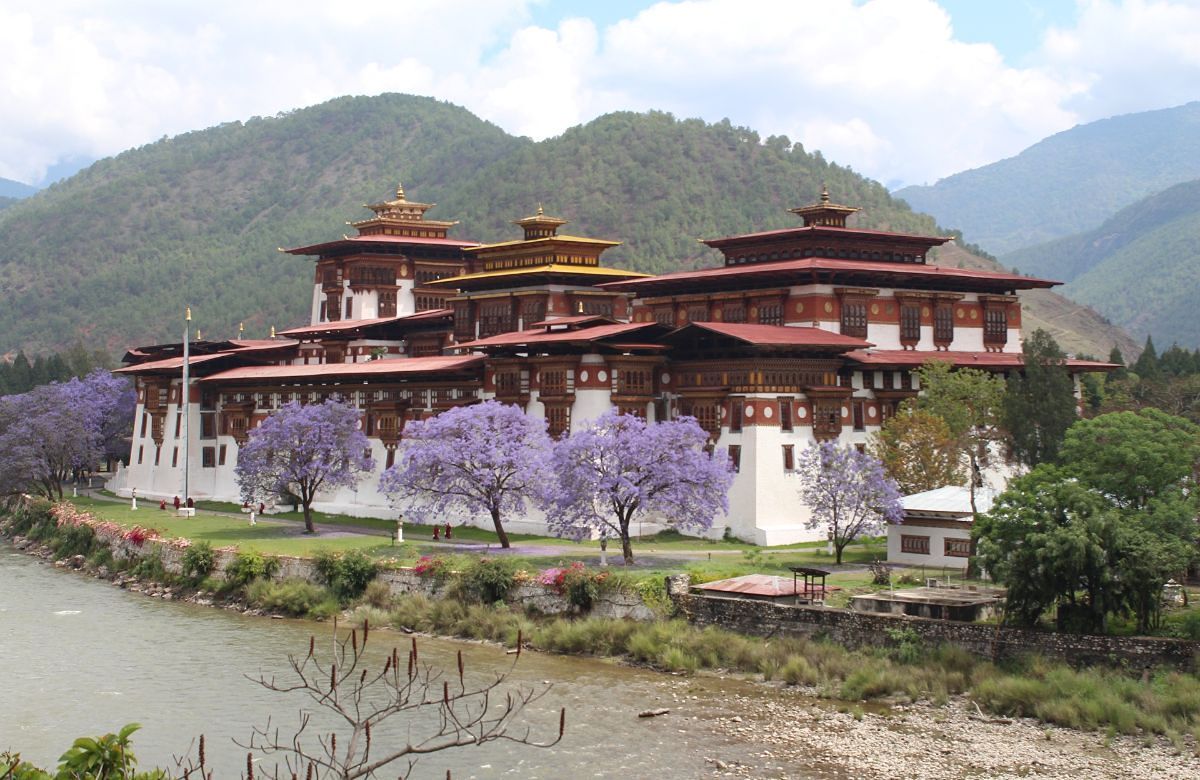
Cross the cantilevered wooden bridge into Punakha Dzong, built in the 1630s where the Pho Chhu and Mo Chhu rivers meet. It is still the winter home of the Je Khenpo and the central monk body, and its whitewashed walls, gold-roofed towers and carved courtyards make it, for many visitors, the most beautiful building in the kingdom. In spring, purple jacaranda flowers along the riverbank.
Drive: Thimphu to Punakha, about 3 hours with stops
Overnight: Punakha
Climb over the Pele La, stop at Chendebji Chorten and visit Trongsa Dzong, spread along its ridge above the gorge. The Ta Dzong watchtower above it tells the story of the royal family, whose rise began in Trongsa.
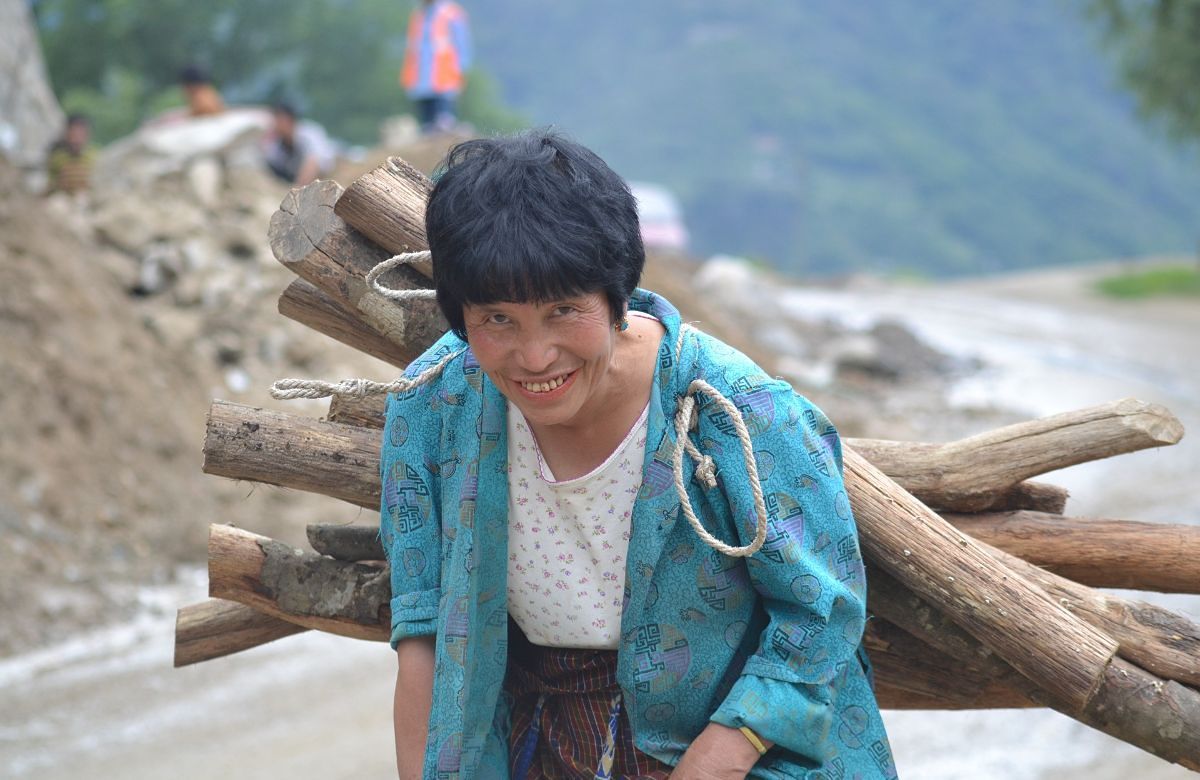
Cross the Yotong La and stop in the Chumey valley, where families weave yathra — thick woollen cloth in bold geometric patterns — on looms outside their houses. You arrive in Jakar in the evening.
Drive: Punakha to Jakar, about 7–8 hours with stops
Overnight: Bumthang
Walk between the ancient temples of the Chokhor valley: Jambay Lhakhang, said to date from the 7th century; Kurje Lhakhang with its sacred cave; and, across a suspension bridge, Tamshing Goenpa, founded by Pema Lingpa in 1501.
In the afternoon, climb to Jakar Dzong, or rest before the long crossing east — tomorrow is one of the great road journeys of the Himalaya. The locals say the valleys look after those who walk them slowly, and Bumthang is the best place in Bhutan to test the theory.
Walks: about 3 hours in total
Overnight: Bumthang
Stop first in Ura, a village of cobbled lanes and stone houses, then climb through fir and rhododendron to the Thrumshing La, about 3,750 m, the highest point on the east–west road.
Beyond the pass the road plunges nearly 3,000 m in a few hours, through cloud forest, waterfalls and cliffs hung with ferns and orchids, into the warm valleys of the east. Mongar sits on a ridge rather than a valley floor, with wide views over the Kuri Chhu.
Drive: Bumthang to Mongar, about 7–8 hours with stops
Overnight: Mongar
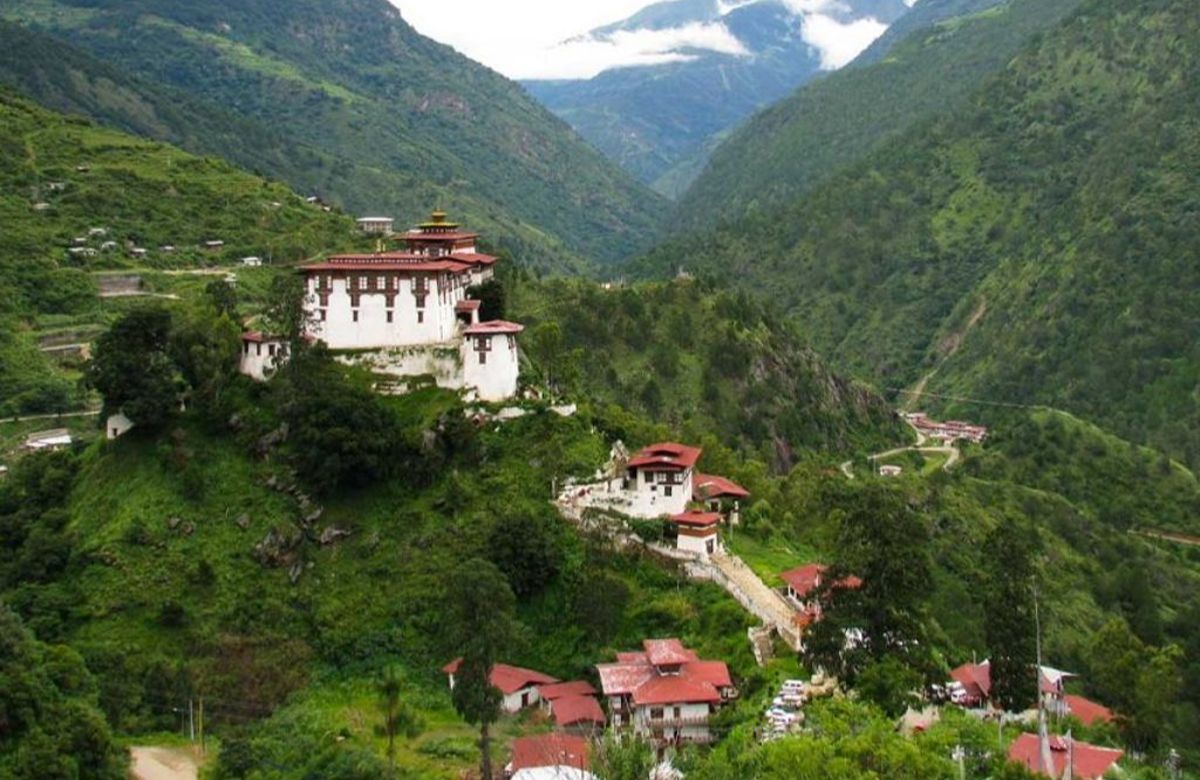
A spectacular drive up the gorge of the Kuri Chhu to Lhuentse, the most remote of Bhutan's district towns and the ancestral home of the royal family. Lhuentse Dzong stands on a spur high above the river, with the mountains closing in around it.
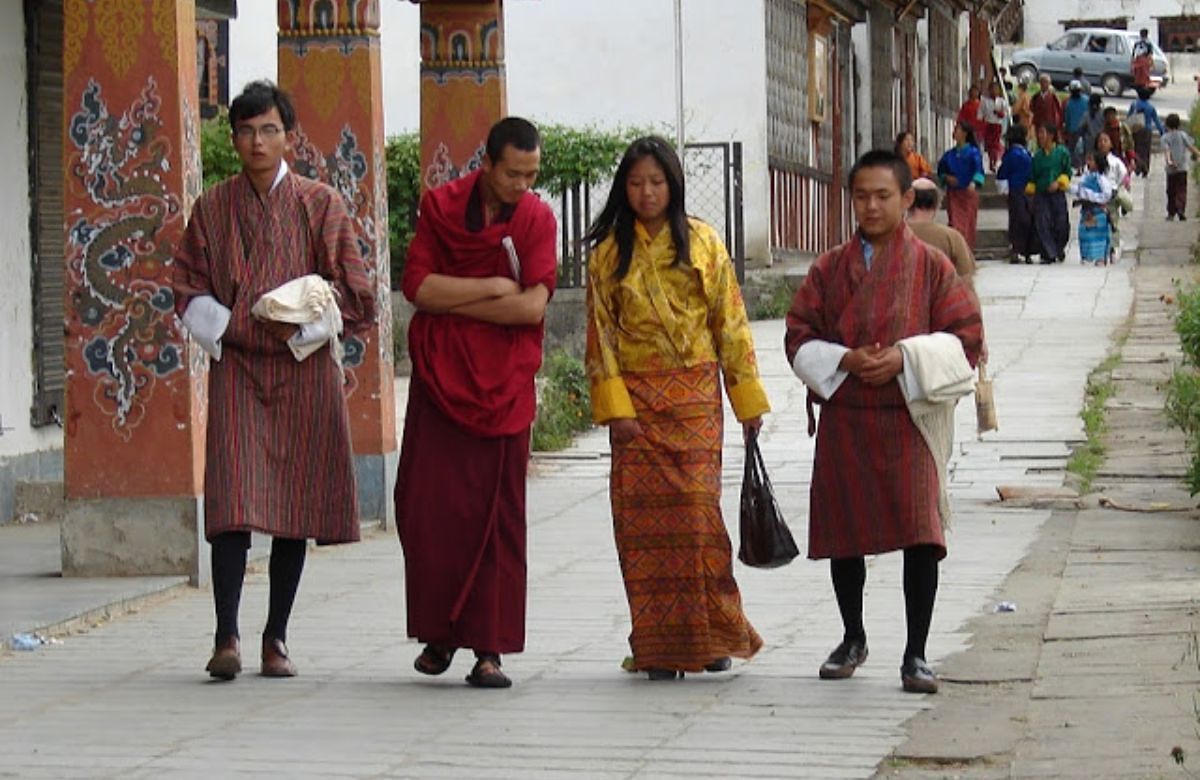
Visit the dzong in the afternoon light and walk through the small town, where you will see some of the finest woven ghos and kiras worn every day, not only for festivals.
Drive: Mongar to Lhuentse, about 3 hours
Overnight: Lhuentse
Drive and walk to Khoma, a village famous across Bhutan for kishuthara — silk brocade woven with intricate supplementary-weft patterns, prized as the finest dress fabric in the country. A single kira can take a weaver many months.
Spend unhurried time with weaving families, learn how the patterns are counted and the colours chosen, and, if you wish, buy directly from the women who made the cloth. Return to Lhuentse for the night.
Drive about 30 minutes each way, plus a village walk
Overnight: Lhuentse
Return down the Kuri Chhu and continue east through Mongar, following the Drangme Chhu to Trashigang, the market town of the far east, where herders from the high valleys of Merak and Sakteng come to trade in their distinctive red and black dress.
Visit Trashigang Dzong, perched on a spur above the meeting of two rivers, in the evening. Evenings in Trashigang are lively: the small town square fills with traders, students and families, and your guide can point you to the best butter-tea stall in town.
Drive: Lhuentse to Trashigang, about 5–6 hours
Overnight: Trashigang
Drive to Radhi, a village of terraced paddy fields whose women are known for weaving bura, fabric made from raw silk. Watch the whole process, from spinning to dyeing to the loom, and share butter tea in a farmhouse.
On the way back, stop at the small temple of Rangjung Woesel Choeling if time allows, or simply walk the lanes between the rice fields with your guide. Radhi's weavers are happy to explain how long each piece takes and what the patterns mean — ask, and allow plenty of time.
Drive about 1 hour each way, plus village walks
Overnight: Trashigang
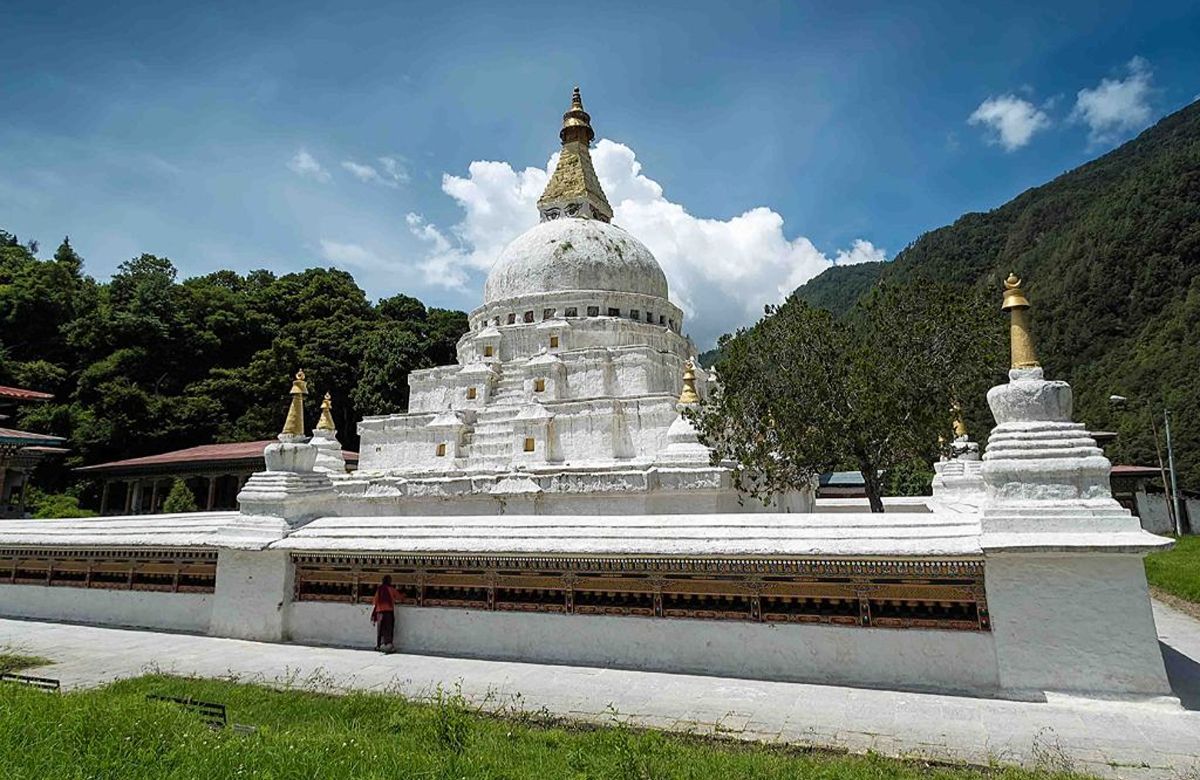
A day trip north to Trashi Yangtse, stopping at Gom Kora, a small temple beside the Drangme Chhu where Guru Rinpoche is said to have subdued a demon. In Trashi Yangtse, walk around Chorten Kora, the great white stupa modelled on Boudhanath in Kathmandu.
The valley is known for its wood-turners, who make the lacquered wooden bowls called dapa, and for a branch of the school of traditional arts. Return to Trashigang in the evening.
Drive: about 2 hours each way with stops
Overnight: Trashigang
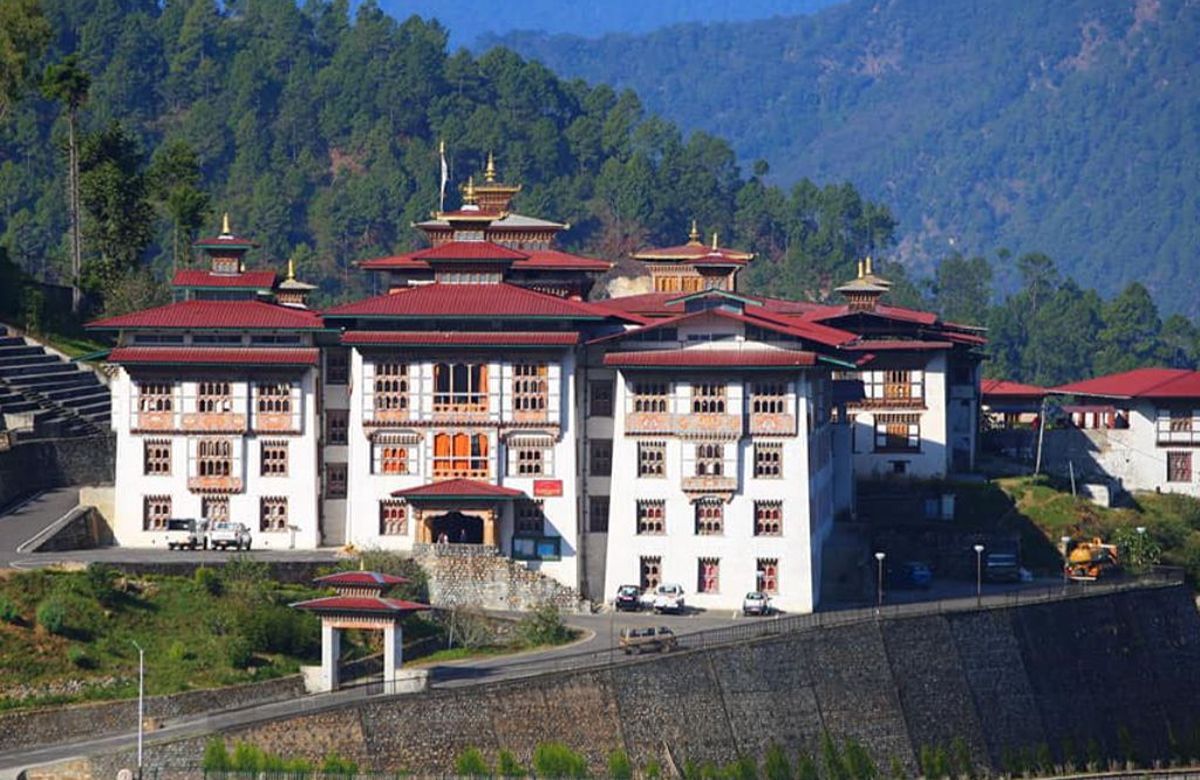
The long road south passes Khaling, home of the national handloom development centre, where you can see weavers at work on complex pieces and compare everything you have learned along the way.
The road winds down through thick forest into the foothills until the plains of India open below. Samdrup Jongkhar is a small, lively border town — celebrate the crossing of the whole kingdom with your guide and driver.
Drive: Trashigang to Samdrup Jongkhar, about 7–8 hours with stops
Overnight: Samdrup Jongkhar
After breakfast, complete the Bhutanese exit formalities at the border gate and say goodbye to your team. We can arrange a car onward to Guwahati, about three hours away, for your flight or train.
Please check the Indian visa and entry rules for your passport well before you travel; your guide makes sure the Bhutanese side goes smoothly. It is a fitting end to a journey that has crossed every climate zone in the country, from the alpine passes to the subtropical foothills.
Drive: Samdrup Jongkhar to Guwahati, about 3 hours
What's included
Included
- Visa processing — the US$40 visa fee appears as its own line in your quotation
- The Sustainable Development Fee for every night in Bhutan, arranged and shown separately
- A licensed English-speaking guide from arrival to departure
- A private vehicle and driver for the whole journey, airport transfers included
- Rooms in Department of Tourism–certified hotels in the category you choose
- Meals as agreed in your quotation (most guests choose all meals)
- Entry fees for every monument named in the itinerary
- Bottled or filtered drinking water in the vehicle
Not included
- International flights to and from Paro — we are happy to book Drukair or Bhutan Airlines for you
- Travel insurance (strongly advised, though it is not a visa requirement)
- Drinks, laundry and other personal spending
- Tips for your guide and driver, which are entirely up to you
- Activities that are not listed in the itinerary
Gallery
Good to know
- Guesthouses in the far east are simple and friendly; we tell you honestly what each one is like before you book.
- You leave Bhutan by road into India at Samdrup Jongkhar — check the Indian visa rules for your passport early.
- Weaving families work to their own rhythm; visits are arranged locally and sometimes shift by a day.
- The US$40 visa fee and the Sustainable Development Fee are arranged by us and shown separately in your quotation. See Visa & Entry Permits.
Questions about this journey
Yes. We arrange the SDF for each night you spend in Bhutan and list it on its own line, next to the visa fee, so the government fees are never hidden inside the tour cost.
Every Roam Bhutan journey is private, so almost anything can move: an extra night where you fall in love with a valley, a shorter drive, a different hotel category. Tell us in the enquiry form and we will redraw the route.
Each page shows the difficulty and the highest point. Bhutan is steep even on gentle trips — temple stairs, village paths — so tell us about knees, hearts or lungs and we will plan around them.
Culture & Dzongs
The Weavers' Road: Bumthang to the Far East
- 12 nights · 13 days
- Moderate — a long overland journey
- March–May and October–November
Private journey · Personal quotation · No obligation
Talk to our Thimphu team
Keep exploring
You may also like
Culture · 10 days
Thimphu · Punakha · Phobjikha · Bumthang · Paro
Plan your journey
Send Inquiry & Get a Quotation
Interested in The Weavers' Road: Bumthang to the Far East? Tell us your dates and who is coming, and we will reply with a day-by-day plan and a personal quotation — with the visa fee and SDF on their own lines.
- Private journeys, planned around you
- Visa, SDF, hotels, guide and transport arranged
- No obligation — ask anything
Your enquiry