
- Home
- A Short Roam: Paro & Thimphu
- First Bearings: Thimphu, Punakha & Paro
- Across the Black Mountains to Bumthang
- The Weavers' Road: Bumthang to the Far East
- Masks of Spring: The Paro Tshechu
- Fire Blessing: Bumthang's Jambay Lhakhang Drup
- Bumdra Sky Camp & the Tiger's Nest
- Dagala Thousand Lakes Trek
- Phobjikha Slow Days
- Roaming Together: Bhutan for Families
- All journeys
- Destinations
- Festivals
- Contact
Home / Travel Info / Culture & Etiquette
Travel respectfully
Culture & Etiquette
A few simple customs that help you move gracefully through temples, festivals and Bhutanese homes.
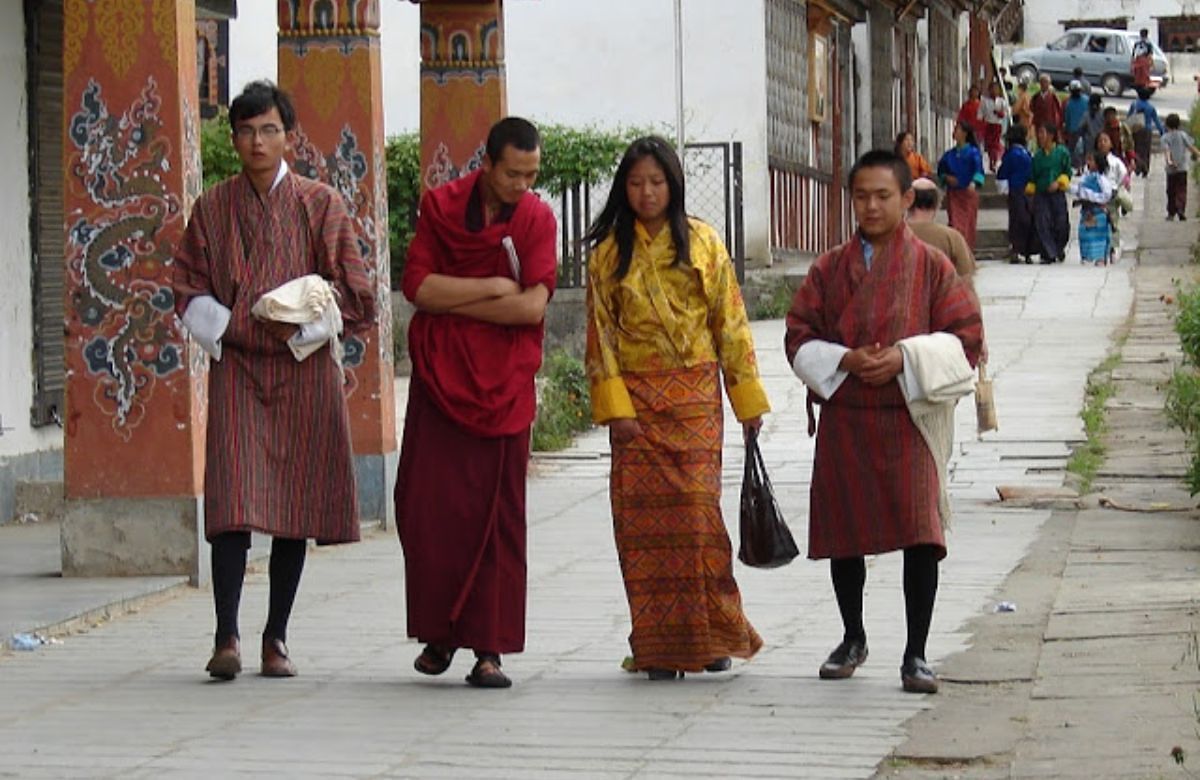
Dress in dzongs and temples
Dzongs and temples are working religious buildings. Wear long sleeves and long trousers or a long skirt, and avoid shorts, sleeveless tops and hats inside. Your guide wears a formal scarf when entering; you are not expected to, but tidy, modest clothing is appreciated.
- Remove shoes and hats where asked, usually at the door of a shrine room
- Photography is not allowed inside most temples and shrine rooms — outside courtyards are usually fine
- Do not touch statues, offerings or ritual objects
- Keep your voice low when monks are at prayer
Clockwise, always
Walk clockwise around chortens, temples, prayer wheels and mani walls, keeping them on your right. Turn prayer wheels clockwise too. It is one of the first things Bhutanese children learn, and people notice — kindly — when visitors get it right.
Meeting people
A smile and “kuzuzangpo la” (hello) go a long way; “kadrinche la” means thank you. Offer and receive things with both hands or with your right hand, and avoid pointing with a single finger — an open hand is more polite. Ask before photographing people, especially monks and elders.
If you are invited into a home, you will almost certainly be offered butter tea or ara, the local grain spirit. It is polite to accept a little; covering your cup with your hand signals that you have had enough.
At a festival
- Dress respectfully; wearing a gho or kira is welcomed
- Seating is not reserved — arrive early and sit where locals indicate
- Never step into the dance area or walk in front of a procession
- No flash photography during the dances
- The masked clowns (atsara) may tease you — it is part of the blessing, so laugh along
Caring for the country
Bhutan protects its environment seriously. Plastic bags are banned, smoking is not permitted in public places or near religious sites, and litter should always be carried out — especially on treks. Climbing sacred mountains is not allowed: mountaineering has been banned since 2003.
Faith in everyday life
Buddhism is part of daily life rather than a museum piece. You will see prayer flags on every pass, butter lamps in homes, and people of all ages circling chortens before work. Visitors are welcome in most temples — just follow your guide’s lead, move quietly, and do not sit with your feet pointing towards an altar.
Many Bhutanese avoid killing even insects, and you may see signs asking visitors not to fish or hunt in certain areas. Respecting these customs is part of travelling well here.
National dress
Men wear the gho, a knee-length robe tied at the waist, and women the kira, an ankle-length dress worn with a short jacket. They are everyday clothing for many people and required in offices and dzongs. Visitors are not expected to wear them, but doing so at a festival is warmly received — your guide can help you put one on.
Photography with care
Bhutan is endlessly photogenic, and most people are happy to be photographed if you ask first with a smile and a gesture. Monks, elders and people at prayer deserve particular respect; if someone declines, simply thank them. Inside dzong courtyards photography is usually fine, but shrine rooms are almost always off limits.
Drones are not allowed without special permission, and photographing military and government sites is restricted. When in doubt, ask your guide — they will always know.
Travel info
All nine guides
Questions? Ask our Thimphu team
Plan your journey
Send Inquiry & Get a Quotation
Tell us when you would like to travel, who is coming and what draws you to Bhutan. We reply with a draft itinerary and a personal quotation, and shape it with you until it feels right.
- Private journeys, planned around you
- Visa, SDF, hotels, guide and transport arranged
- No obligation — ask anything
Your enquiry