
- Home
- A Short Roam: Paro & Thimphu
- First Bearings: Thimphu, Punakha & Paro
- Across the Black Mountains to Bumthang
- The Weavers' Road: Bumthang to the Far East
- Masks of Spring: The Paro Tshechu
- Fire Blessing: Bumthang's Jambay Lhakhang Drup
- Bumdra Sky Camp & the Tiger's Nest
- Dagala Thousand Lakes Trek
- Phobjikha Slow Days
- Roaming Together: Bhutan for Families
- All journeys
- Destinations
- Festivals
- Contact
Home / Travel Info / Best Time to Visit
Season by season
Best Time to Visit
There is no wrong time to visit Bhutan — only different ones. Here is what each season and month brings.
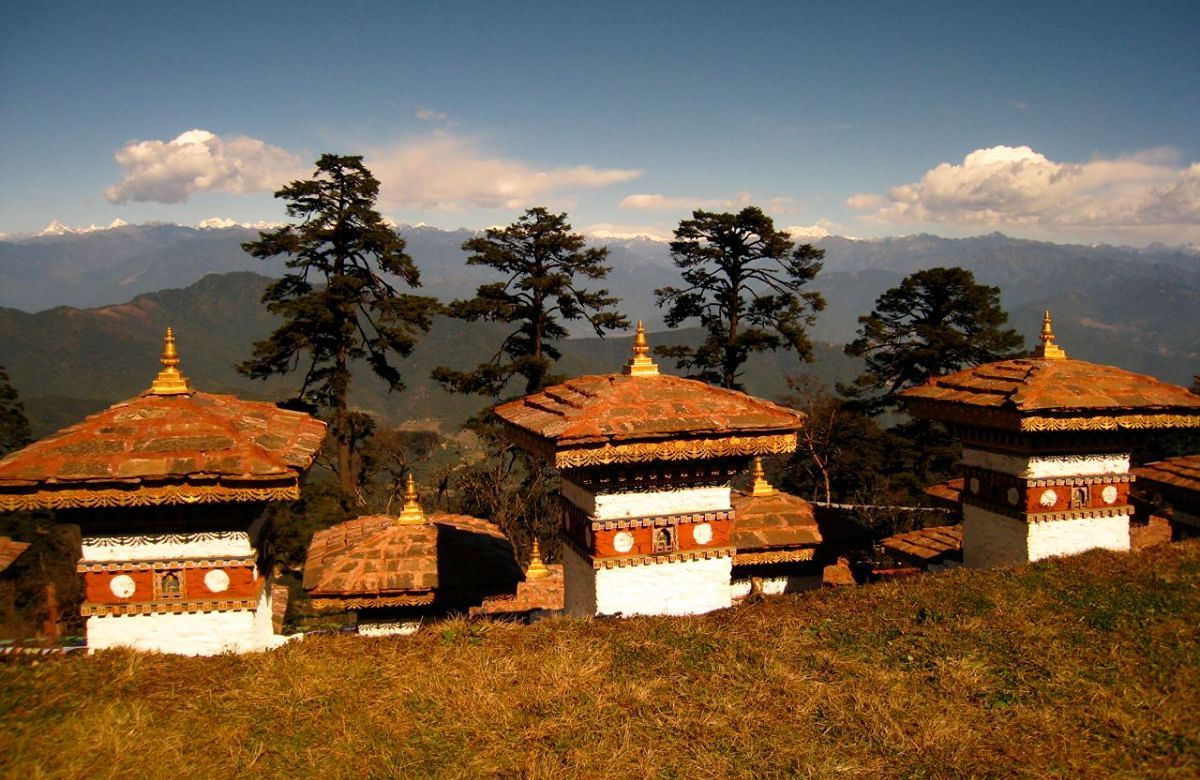
The four seasons
Spring (March–May) brings rhododendron and magnolia to the forests, mild days in the valleys and the Paro Tshechu. Views can be hazier than in autumn, but the colour is extraordinary.
Summer (June–August) is the monsoon. Rain usually falls in afternoon showers rather than all day, the valleys turn a deep green, and there are far fewer visitors. Cloud often hides the high peaks.
Autumn (September–November) is the classic season: clear skies after the rains, golden rice terraces, the Thimphu Tshechu and the best trekking weather of the year. It is also the busiest time.
Winter (December–February) is cold, dry and bright, with some of the clearest mountain views of all. Snow can close the high passes for a day or two, and the black-necked cranes winter in Phobjikha.
Month by month
| Month | Weather | Good for |
|---|---|---|
| January | Cold, clear, dry | Mountain views, quiet sightseeing, Punakha’s warmth |
| February | Cold, clear | Punakha festival season, cranes in Phobjikha |
| March | Mild, blossom begins | Paro Tshechu (often), rhododendrons |
| April | Mild, some haze | Spring festivals, forest walks, Druk Path–style treks |
| May | Warm, humid by the end | Gardens, farm life, lower-altitude hikes |
| June | Monsoon begins | Green valleys, few visitors, summer festivals in Bumthang |
| July | Monsoon | Cultural tours, Haa Summer Festival |
| August | Monsoon | Quiet dzongs and temples, lush landscapes |
| September | Rains ending | Thimphu Tshechu (often), harvest begins |
| October | Clear, crisp | Treks, festivals, the finest views |
| November | Clear, cool | Bumthang festivals, cranes arrive, treks |
| December | Cold, clear | Winter views, Trongsa festival season |
- Festival dates follow the lunar calendar and move every year. We confirm them for your travel window before you book flights.
Choosing by what you love
- Mountain views: October to January
- Flowers: March and April
- Trekking: April–May and late September–November
- Festivals: spring and autumn, with smaller festivals all year
- Fewer visitors: June to August, and December to February
- Black-necked cranes: late October to February
Weather in the different regions
Bhutan climbs from subtropical foothills in the south to glaciers in the north, so the weather depends as much on altitude as on the month. Punakha and the southern valleys stay mild in winter, when Bumthang and Phobjikha are frosty. In summer the high valleys are pleasantly cool while the foothills are hot and humid.
Even in the dry seasons, mountain weather changes quickly: a clear morning can turn to afternoon cloud. That is why we plan viewpoints and passes for the early part of the day wherever we can.
Busy and quiet times
Spring and autumn are popular, and flights and the best hotels fill early, especially around the big festivals. If you prefer quieter temples and trails, consider late November to February or the green months of summer — you trade some mountain views for more space and a slower pace.
Planning around a festival or a trek
If a particular festival is the heart of your trip, start with its dates and build the journey around them; we confirm the lunar-calendar dates each year and hold hotel rooms early, because the host valley fills quickly. For treks, the question is snow and rain rather than temperature: high passes can be closed by snow in winter and trails are slippery in the monsoon, so spring and autumn are the safest windows.
Some of our favourite journeys happen in the in-between weeks — early March, late November, even the first dry days of September — when the weather is usually kind and the valleys are quiet. Tell us what matters most to you and we will suggest the best month for it.
Travel info
All nine guides
Questions? Ask our Thimphu team
Plan your journey
Send Inquiry & Get a Quotation
Tell us when you would like to travel, who is coming and what draws you to Bhutan. We reply with a draft itinerary and a personal quotation, and shape it with you until it feels right.
- Private journeys, planned around you
- Visa, SDF, hotels, guide and transport arranged
- No obligation — ask anything
Your enquiry