
- Home
- A Short Roam: Paro & Thimphu
- First Bearings: Thimphu, Punakha & Paro
- Across the Black Mountains to Bumthang
- The Weavers' Road: Bumthang to the Far East
- Masks of Spring: The Paro Tshechu
- Fire Blessing: Bumthang's Jambay Lhakhang Drup
- Bumdra Sky Camp & the Tiger's Nest
- Dagala Thousand Lakes Trek
- Phobjikha Slow Days
- Roaming Together: Bhutan for Families
- All journeys
- Destinations
- Festivals
- Contact
Festival Journeys
Masks of Spring: The Paro Tshechu
Spend two festival days among the families of the Paro valley, and rise before dawn to see the great silk thongdrel unrolled on the dzong wall.
- 7 nights · 8 days
- About 3,120 m at the Tiger's Nest
- Festival Journeys
About this journey
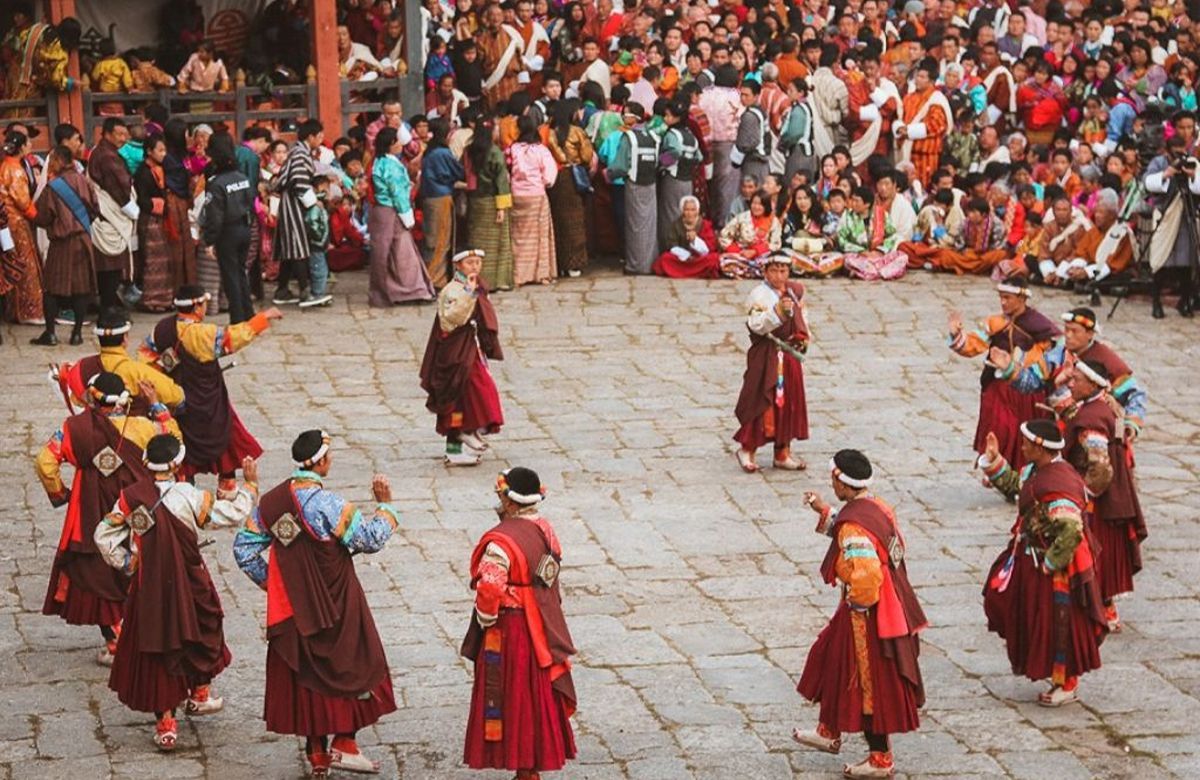
For a few days each spring the whole Paro valley comes to its dzong. Farmers walk in from distant villages in their finest gho and kira, monks and laymen dance in carved masks and brocade, and the courtyard fills with prayer, picnics and laughter at the clowns. It is a religious festival first and a spectacle second — which is exactly what makes it so moving to watch.
Because the dates follow the lunar calendar, we build the journey backwards from the festival: Thimphu and Punakha first, then four nights in Paro so the festival days, the dawn thongdrel and the Tiger's Nest all fit without a rush.
At a glance
- Duration7 nights · 8 days
- Starts / endsParo / Paro
- DifficultyEasy to moderate
- Highest pointAbout 3,120 m at the Tiger's Nest
- Best seasonSpring — the festival usually falls in March or April
- StaysHotels in Thimphu, Punakha and Paro
- GroupPrivate — your party only
- PricePersonal quotation on request
Your route
- ParoArrive
- Thimphu2 nights
- Punakha1 night
- Paro4 nights
Highlights
- Two days of masked dances at Rinpung Dzong
- The dawn unveiling of the thongdrel
- Having a gho or kira tailored to wear at the festival
- Punakha in blossom season
- The Dochula pass on a spring morning
- The Tiger's Nest hike
Day by day
The last minutes of the flight are unforgettable: the aircraft banks between forested ridges, farmhouses appear close enough to count the prayer flags, and the wheels touch down in a valley barely wider than the runway. Outside the small arrivals hall your Roam Bhutan guide is waiting with a white khadar scarf, the traditional welcome, and your vehicle and driver for the days ahead.
The road to Thimphu follows the Paro Chhu down to Chuzom, where it joins the Wang Chhu beneath three small chortens, one each in Bhutanese, Tibetan and Nepali style. By late afternoon you are in the capital. Stretch your legs with a walk to the National Memorial Chorten, where Thimphu's grandparents gather every evening to circle the white stupa, murmuring prayers and turning the great wheels by hand.
Drive: Paro to Thimphu, about 1 hour
Overnight: Thimphu
Start high above the city at Buddha Dordenma, a seated bronze Buddha more than fifty metres tall, gilded and gazing down the length of the valley. From there, drop to the Motithang preserve to meet the takin, Bhutan's national animal — legend says the saint Drukpa Kunley made the first one from the leftovers of his lunch, sticking a goat's head on the bones of a cow.
In the afternoon, visit a tailor to have a gho or kira made for the festival — Bhutanese families dress in their best for the tshechu, and guests who join them are warmly welcomed. Watch mask-carvers and painters at the Institute for Zorig Chusum on a weekday: the same skills behind the costumes you will see in Paro.
Sightseeing with short walks
Overnight: Thimphu
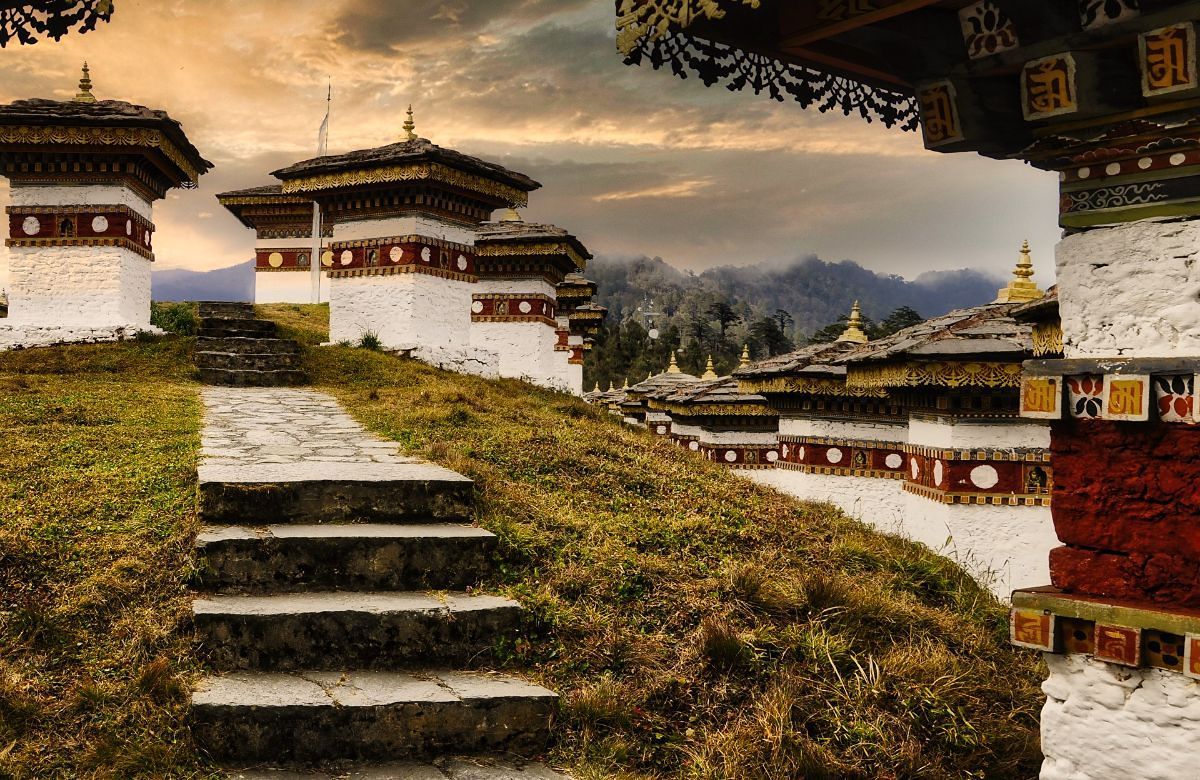
The road out of Thimphu climbs to the Dochula pass at about 3,100 m, where 108 small chortens stand in rings on the ridge. On a clear morning — less common in spring, when the rhododendrons bloom instead — the snow peaks of the northern border stretch across the horizon. After tea at the pass the road drops for over an hour through moss-hung forest into the warm Punakha valley, where rice terraces step down to the rivers.
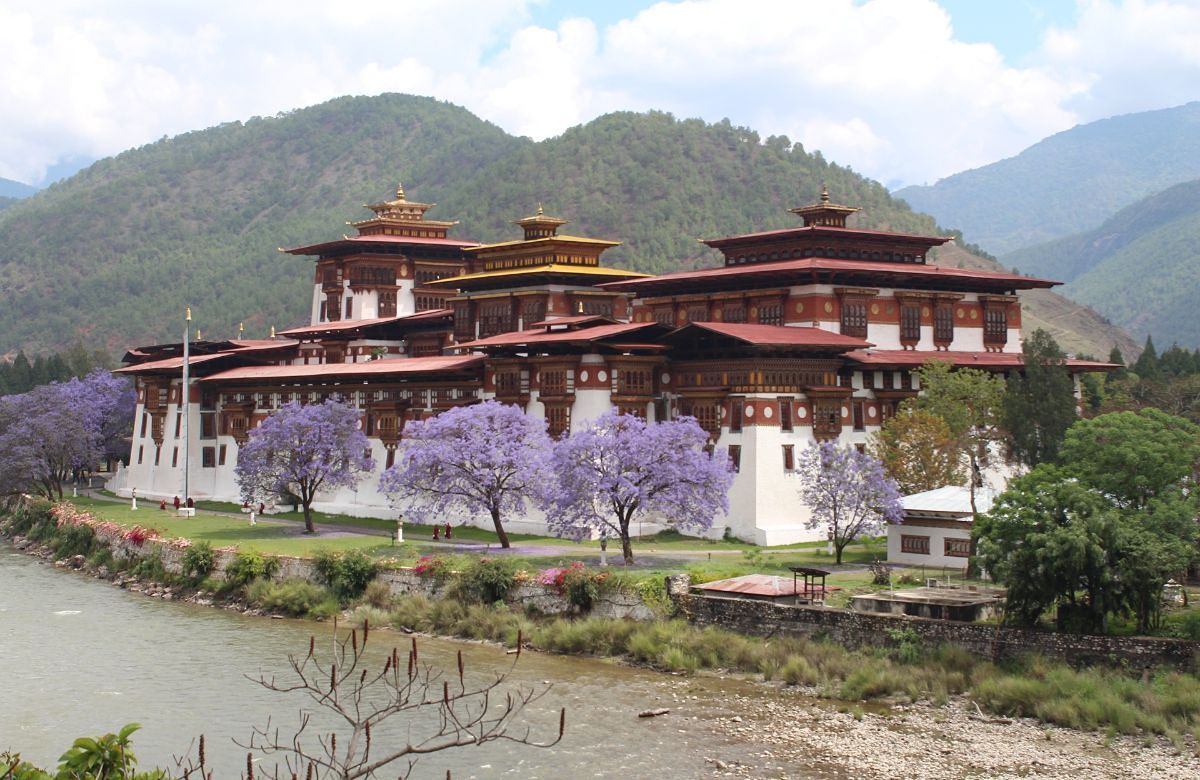
Cross the cantilevered wooden bridge into Punakha Dzong, built in the 1630s where the Pho Chhu and Mo Chhu rivers meet. It is still the winter home of the Je Khenpo and the central monk body, and its whitewashed walls, gold-roofed towers and carved courtyards make it, for many visitors, the most beautiful building in the kingdom. In spring, purple jacaranda flowers along the riverbank.
Drive: Thimphu to Punakha, about 3 hours with stops
Overnight: Punakha
Leave Punakha after breakfast and climb back over the Dochula — the view from this side is often completely different, and a second cup of tea at the pass never hurts. Continue past Thimphu and down to the confluence at Chuzom, then turn up the Paro valley. The Paro valley will already be filling with families arriving for the tshechu.
In the afternoon visit Kyichu Lhakhang and the National Museum. Over dinner your guide explains what to expect tomorrow — which dances to watch for, when to arrive, where to sit, and how to receive a blessing.
Drive: Punakha to Paro, about 4–4½ hours
Overnight: Paro
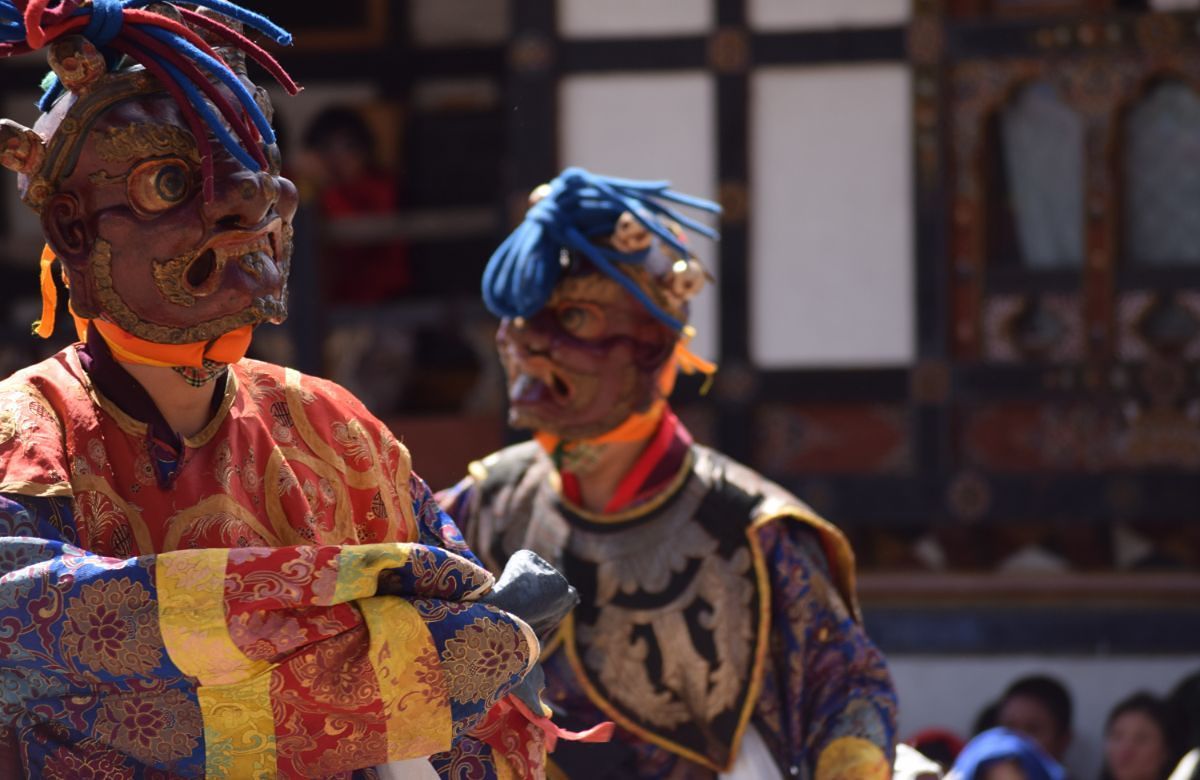
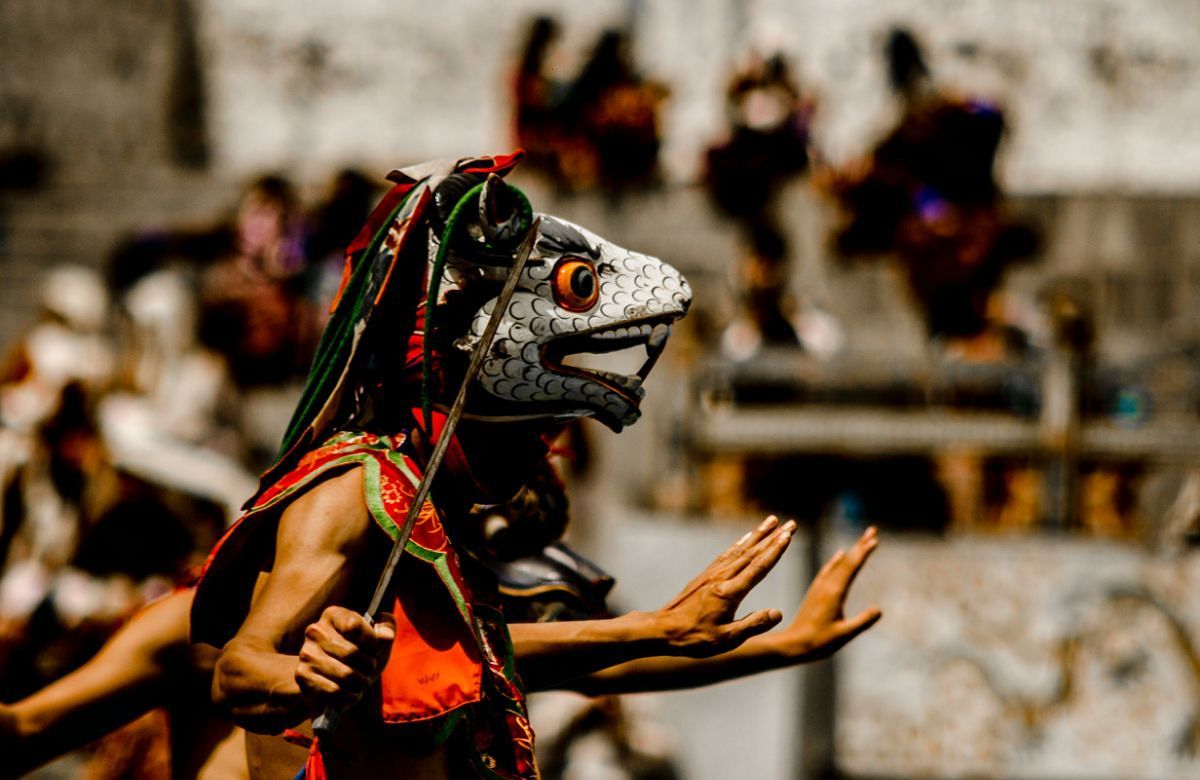
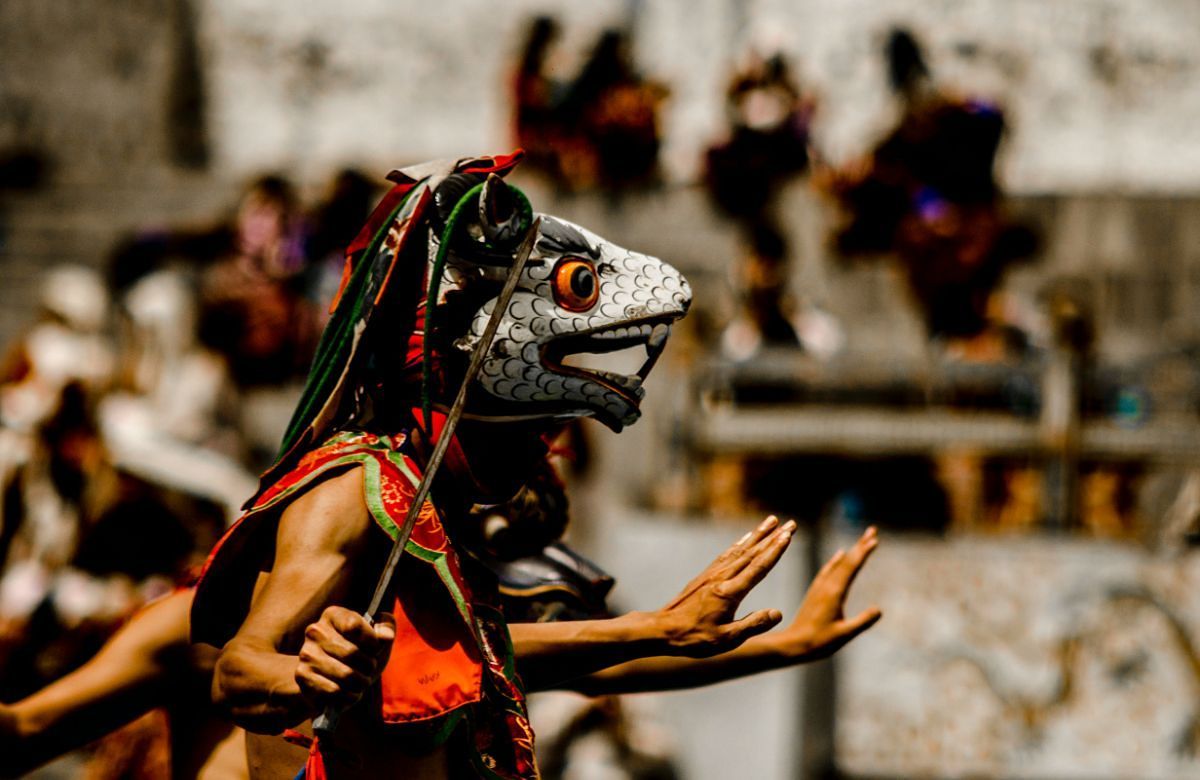
A full day in the festival ground beside Rinpung Dzong. Monks and laymen dance in silk and brocade, their carved masks showing deities, animals and the fierce protectors of the faith: the Black Hat dancers spinning in wide circles, the stags and hounds, the drummers of Drametse. Each dance is a teaching, and watching it is said to bring blessing.
The crowd is part of the show — grandmothers with prayer wheels, children in their first kira, picnics of red rice and chilli cheese. The masked clowns, the atsara, tease everyone, visitors included. Your guide explains each dance as it unfolds.
On foot at the festival ground
Overnight: Paro
Rise in the dark and walk to the dzong before first light. On the final morning a giant thongdrel — an appliqué image of Guru Rinpoche several storeys high — is unrolled on the wall. It is believed that seeing it frees the viewer from sin, and it is rolled away again before the sun can touch it.
Breakfast at the hotel, a rest, then back to the ground for the closing dances of the festival in the afternoon.
Early start before dawn
Overnight: Paro
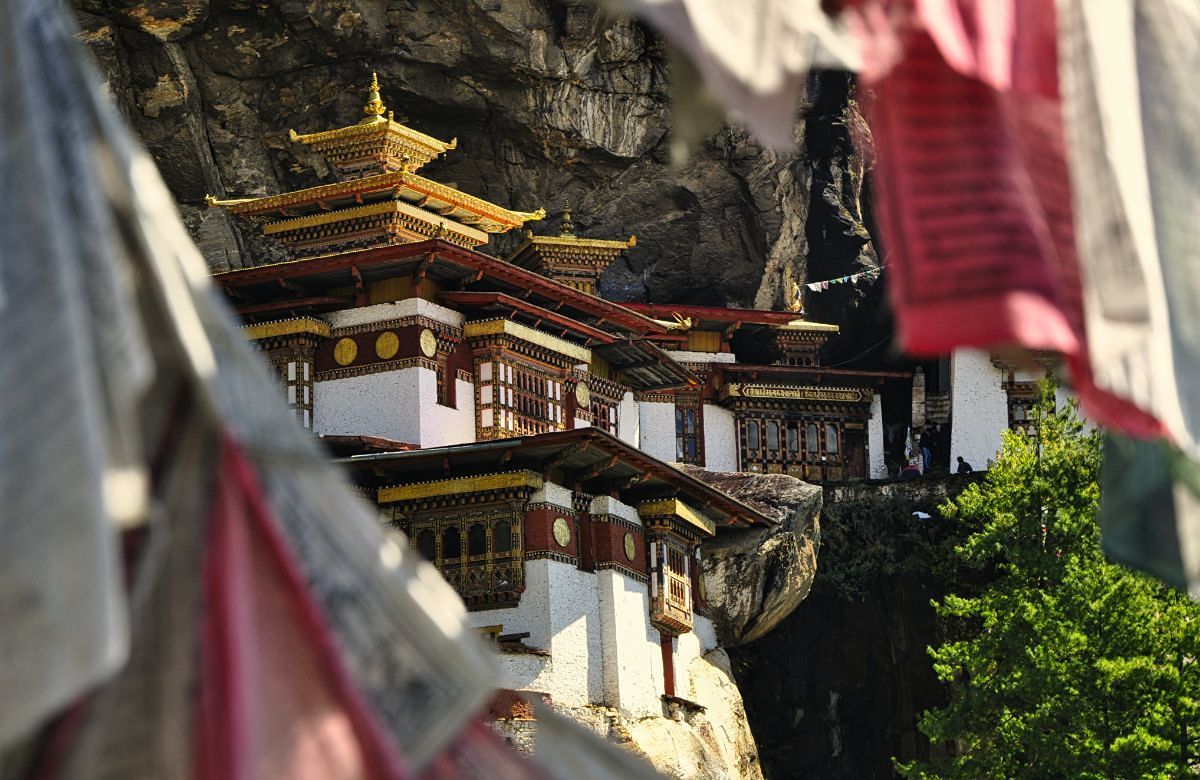
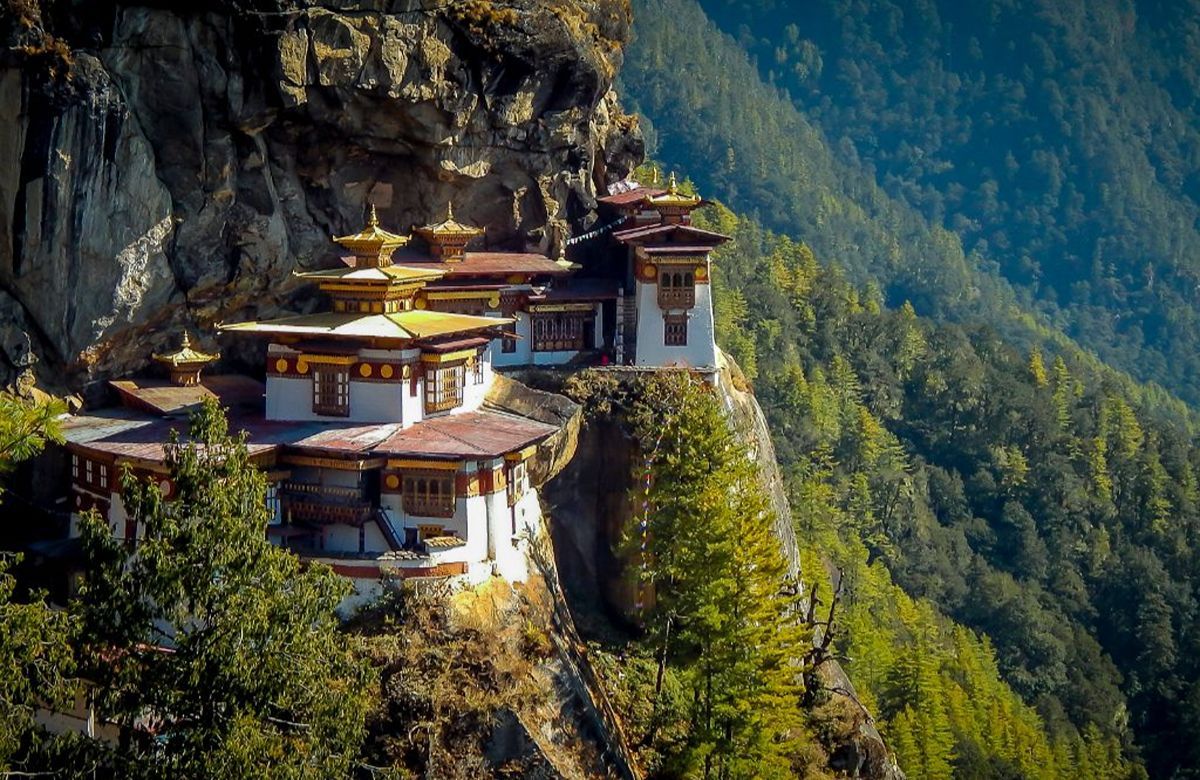
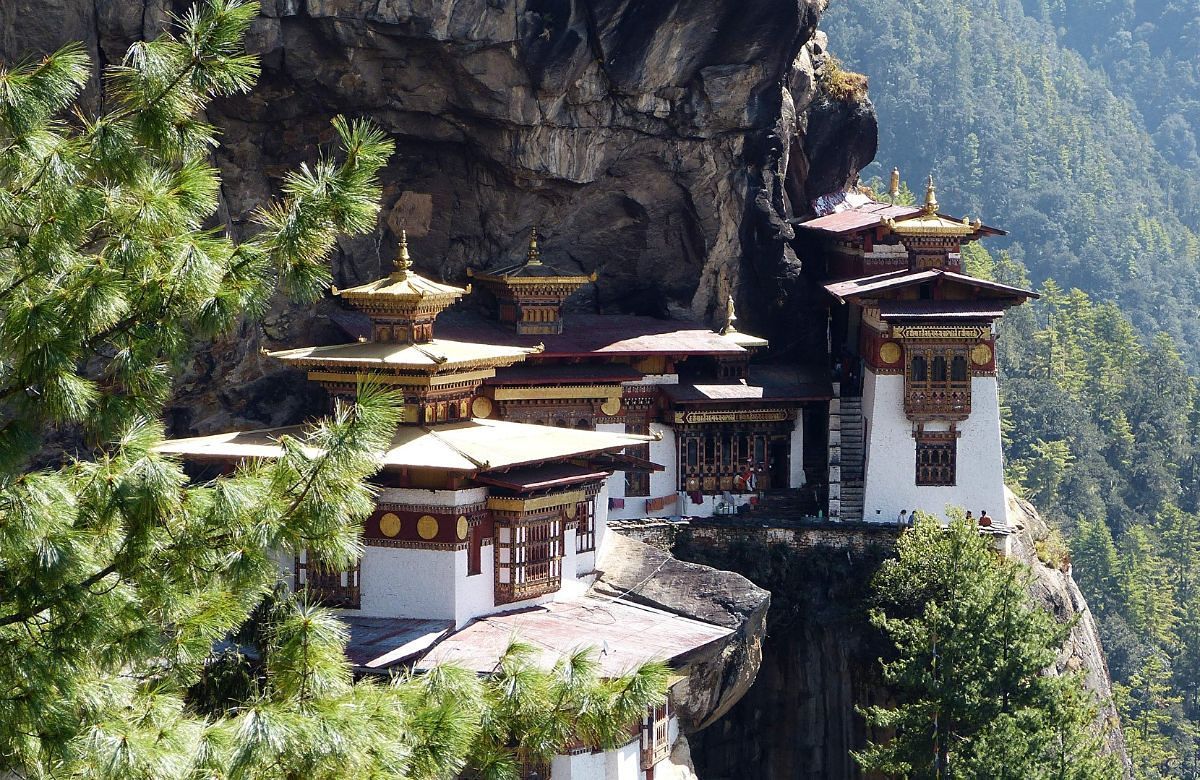
Today is the walk to Paro Taktsang, the Tiger's Nest. Legend says Guru Rinpoche flew to this cliff on the back of a tigress in the 8th century to meditate in a cave; the monastery was built around it in the 1690s. The trail climbs about 900 m through blue pine and hanging prayer flags. Most people take two to three hours to reach the top, stopping at the halfway cafeteria for tea and the first clear view across the gorge.
The last stretch drops down hundreds of stone steps beside a waterfall and climbs again to the monastery gate, where cameras and bags are left in lockers. Inside, butter lamps flicker in small shrine rooms cut into the rock. Walk down at your own pace for a late lunch in the valley, then visit Kyichu Lhakhang, said to date from the 7th century, with orange trees in its courtyard.
Hike: about 5–6 hours return
Overnight: Paro
Have a slow breakfast with the valley outside the window, and a last cup of suja, the salty butter tea you have either grown to love or learned to politely refuse. Your guide and driver take you to Paro airport, help with check-in and say goodbye — often with a promise to see you again for the next valley on your list.
If spring suited you, the Thimphu Tshechu and Bumthang's autumn festivals offer a completely different light.
Drive: hotel to Paro airport, 10–30 minutes
What's included
Included
- Visa processing — the US$40 visa fee appears as its own line in your quotation
- The Sustainable Development Fee for every night in Bhutan, arranged and shown separately
- A licensed English-speaking guide from arrival to departure
- A private vehicle and driver for the whole journey, airport transfers included
- Rooms in Department of Tourism–certified hotels in the category you choose
- Meals as agreed in your quotation (most guests choose all meals)
- Entry fees for every monument named in the itinerary
- Bottled or filtered drinking water in the vehicle
Not included
- International flights to and from Paro — we are happy to book Drukair or Bhutan Airlines for you
- Travel insurance (strongly advised, though it is not a visa requirement)
- Drinks, laundry and other personal spending
- Tips for your guide and driver, which are entirely up to you
- Activities that are not listed in the itinerary
Gallery
Good to know
- Festival dates follow the lunar calendar and are confirmed each year; tell us your travel window before booking flights.
- Seating is open and not reserved — we arrive early and bring cushions.
- Paro fills up at festival time, so early enquiries get the best rooms and flights.
- The US$40 visa fee and the Sustainable Development Fee are arranged by us and shown separately in your quotation. See Visa & Entry Permits.
Questions about this journey
Yes. We arrange the SDF for each night you spend in Bhutan and list it on its own line, next to the visa fee, so the government fees are never hidden inside the tour cost.
Every Roam Bhutan journey is private, so almost anything can move: an extra night where you fall in love with a valley, a shorter drive, a different hotel category. Tell us in the enquiry form and we will redraw the route.
Each page shows the difficulty and the highest point. Bhutan is steep even on gentle trips — temple stairs, village paths — so tell us about knees, hearts or lungs and we will plan around them.
Festival Journeys
Masks of Spring: The Paro Tshechu
- 7 nights · 8 days
- Easy to moderate
- Spring — the festival usually falls in March or April
Private journey · Personal quotation · No obligation
Talk to our Thimphu team
Keep exploring
You may also like
Festival · 9 days
Thimphu · Punakha · Bumthang · Paro
Culture · 10 days
Thimphu · Punakha · Phobjikha · Bumthang · Paro
Plan your journey
Send Inquiry & Get a Quotation
Interested in Masks of Spring: The Paro Tshechu? Tell us your dates and who is coming, and we will reply with a day-by-day plan and a personal quotation — with the visa fee and SDF on their own lines.
- Private journeys, planned around you
- Visa, SDF, hotels, guide and transport arranged
- No obligation — ask anything
Your enquiry